How much do cash home buyers pay in Rhode Island?
A cash buyer's offer comes from a few numbers: what the house would sell for fixed up, what the work costs, what it costs to resell, and the buyer's profit. I Buy Rhode Island Houses uses the same math on every house.
Get a cash offer on your house
Start with the property address. The whole thing takes about a minute.
There's no obligation, and you don't pay a commission when you sell to us.
Thanks, Maria. We've got it.
We'll call you from 401-267-1400 shortly. If you'd rather talk now, give us a call.
A cash home buyer pays less than a full retail sale. The offer starts with what the house would sell for after repairs, then subtracts the repairs, the costs to buy, hold and resell it, and the buyer's profit. No single percentage fits every house, so it pays to ask any buyer, including I Buy Rhode Island Houses, to show you the numbers.
The formula, line by line
- What the house would sell for after repairs
- Minus the cost of the repairs
- Minus the costs to buy, hold and resell it
- Minus the buyer's profit
- The cash offer
What the house would sell for after repairs
A cash buyer's offer, including one from I Buy Rhode Island Houses, starts with the after-repair value, or ARV: what the house would likely sell for once it's fixed up. A buyer works it out from recent sales of similar houses nearby, so the ARV for a triple-decker in Pawtucket comes from other Pawtucket triple-deckers rather than a statewide average.
The cost of the repairs
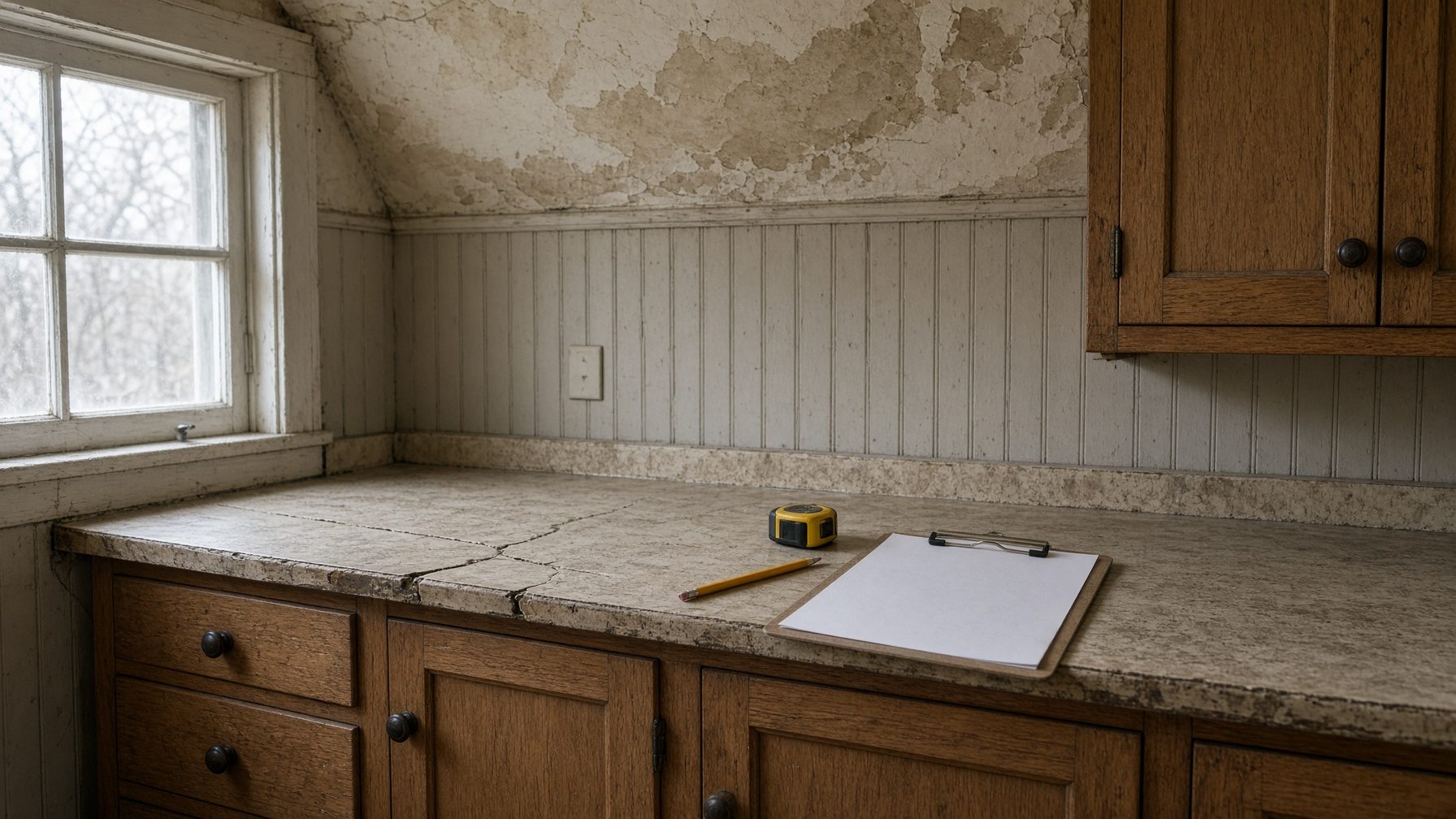
Repairs are usually the biggest variable. A roof, a heating system, a foundation problem or a full kitchen can each change the number a lot, and a buyer prices the work at what it will actually cost to hire out.
In Rhode Island, buyers also count the cost of a cesspool, which has to be replaced or tied into the sewer within 12 months after most sales.
The costs to buy, hold and resell it
A cash buyer pays costs at both ends: buying the house from you, carrying it while the work gets done, and selling it again. In Rhode Island those include:
- The state's real estate conveyance tax when the house is resold: $3.75 for every $500 of the price, which the seller pays unless the contract says otherwise.
- Property taxes, insurance and utilities while the house sits empty. In Providence, for example, the FY2026 rate for a single-family house the owner doesn't live in is $14.60 per $1,000 of assessed value, against $8.40 for an owner who lives there.
- Recording the deed, which costs $80 under state law, plus the title work and closing costs on both the purchase and the resale.
- An agent's commission if the finished house is listed for sale.
The buyer's profit
The last thing a cash buyer subtracts is their profit, the margin that makes the risk worth taking. If the repairs run over or the market softens before the house resells, that margin absorbs it. That's why a cash offer from I Buy Rhode Island Houses, or any cash buyer, is less than a full retail sale. In exchange, the buyer takes the house as it is and closes on your schedule.
A Rhode Island example
These numbers are made up to show the math. They aren't a quote, and every house is different.
| Line | Amount |
|---|---|
| What the house would sell for after repairs | $350,000 |
| Repairs (a roof, a kitchen and a heating system) | −$45,000 |
| Conveyance tax when it's resold ($3.75 per $500) | −$2,625 |
| Other costs to buy, hold and resell it | −$27,375 |
| The buyer's profit | −$35,000 |
| The cash offer | $240,000 |
In this example the offer comes to about 69% of the after-repair value. That isn't a fixed rule. A house that needs less work keeps more of its value in the offer.
If you fixed it up and listed it yourself, you'd collect more on paper, but you'd pay for the work, carry the costs and wait for a buyer. Cash offer or realtor: what you'd net both ways.
How to tell a fair cash offer from a lowball
- The buyer can explain the number: the after-repair value they used and what they think the work costs.
- The offer is in writing, and there are no fees for you to pay.
- The buyer is the one closing. A wholesaler signs a contract and then sells it to another investor, so their number has to leave room for both of them.
- The closing happens at a title company or attorney's office, and nobody asks you for money up front.
- The price doesn't drop at the last minute without a real reason, like a problem nobody knew about.
Three kinds of cash buyer
The kind of buyer changes where the number comes from and how sure the closing is.
| Question | Direct buyer, like us | Wholesaler | Large online buyer |
|---|---|---|---|
| Who ends up owning the house | The buyer you signed with | Usually another investor the wholesaler finds | The company |
| Whose money pays for it | The buyer's own | The end investor's | The company's |
| Houses they usually buy | Any condition | Usually houses that need work | Mostly newer houses in good shape, in the markets they cover |
| After you sign | They close on it | Your contract can be sold to someone else | The offer can change after their inspection |
I Buy Rhode Island Houses is a direct buyer. We buy with our own money, and we don't sign a contract and then pass it to another investor.
When a cash offer makes sense, and when listing nets more
A cash offer on a Rhode Island house tends to make sense when the house needs work you don't want to pay for, or when the situation is complicated: an inherited house with several owners, tenants, liens or a title problem. A cash offer also fits when timing matters more to you than getting every last dollar.
If the house is in good shape and you have time, listing it will probably net you more.
Questions about cash offers
How much will a cash buyer pay for my house?
It depends on what the house would sell for after repairs and what those repairs cost. The offer is that value minus the repairs, the costs to buy, hold and resell, and the buyer's profit. I Buy Rhode Island Houses puts the offer in writing and will walk you through the numbers.
What percentage of value do investors pay?
There's no fixed percentage. You may see a "70% rule" online, where a flipper pays no more than 70% of the after-repair value, minus the repairs. It's a shortcut rather than a law, and I Buy Rhode Island Houses works from the real numbers on your house.
What is ARV?
ARV stands for after-repair value: what a house would likely sell for once it's fixed up, based on recent sales of similar houses nearby.
Can I negotiate a cash offer?
You can ask. A good cash buyer can show you how each number was reached, so if they missed something, like a new roof or a newer furnace, tell them.
Why are some cash offers so low?
Some buyers start low so they have room to negotiate. A wholesaler also has to leave a margin for the investor they'll sell your contract to. Ask any buyer to put the offer in writing and explain the numbers.
What repairs take the most off an offer?
The big-ticket items: a roof, a foundation problem, heating or electrical systems, water damage, and in Rhode Island, a cesspool that has to be replaced after the sale.
Do you pay the closing costs?
Yes. When you sell your house to I Buy Rhode Island Houses, we cover the closing costs, and there's no agent commission.
Sources
Rhode Island General Laws, Division of Taxation and Division of Municipal Finance figures, checked October 2026. This page is general information rather than legal or tax advice.
- R.I. Gen. Laws § 44-25-1, the realty conveyance tax: webserver.rilegislature.gov
- RI Division of Taxation, Advisory 2025-13, the October 1, 2025 rate: tax.ri.gov
- R.I. Gen. Laws § 23-19.15-12, cesspools after a sale: webserver.rilegislature.gov
- R.I. Gen. Laws § 34-13-7, recording fees: webserver.rilegislature.gov
- RI Division of Municipal Finance, FY2026 tax rates by class of property: municipalfinance.ri.gov
Want to see the numbers on your house?
Fill out the form at the top of the page or call I Buy Rhode Island Houses at 401-267-1400. We'll put the offer in writing, and there's no obligation.