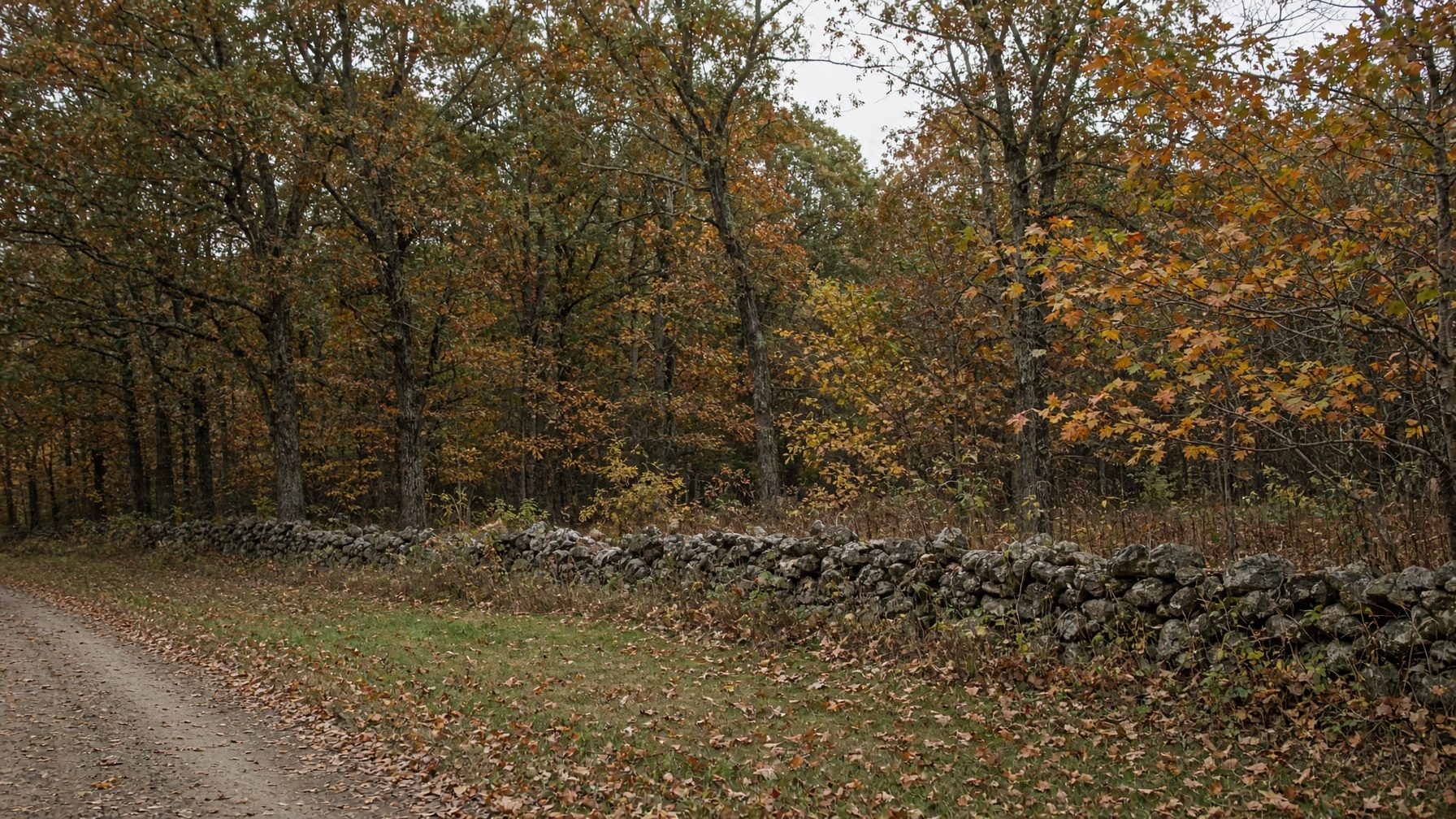
Sell your Rhode Island land for cash
I Buy Rhode Island Houses buys land as well as houses. Tell us where it is, and we'll put a cash offer in writing, with no commission.
Get a cash offer on your house
Start with the property address. The whole thing takes about a minute.
There's no obligation, and you don't pay a commission when you sell to us.
Thanks, Maria. We've got it.
We'll call you from 401-267-1400 shortly. If you'd rather talk now, give us a call.
You can sell land in Rhode Island for cash without listing it, and I Buy Rhode Island Houses buys land as well as houses. What a piece of land is worth depends on what can be built there, which comes down to the town's zoning, whether the soil can take a septic system, and any wetlands or coastal rules. Rhode Island's seller disclosure covers vacant land too, on its own form. Our offer is less than a full retail sale, in exchange for speed and certainty, and we can close in as little as 7 days or on the date you pick.
How selling land to us works
Tell us about the land
Fill out the form or call 401-267-1400. A street address works, or the assessor's plat and lot number if there isn't one.
Get a written cash offer
We'll look at the land and what can be done with it, and put an offer in writing. There's no obligation to take it.
Close on your date
We close in as little as 7 days, or on the date you pick, and we cover the closing costs.
Selling land in Rhode Island for cash
I Buy Rhode Island Houses buys land in Rhode Island for cash. We look at the land and its paperwork with you, make a written offer, and close on your schedule, with no listing, no commission and no buyer's loan to wait on. Our price is less than a full retail sale, in exchange for speed and certainty. If your land is ready to build on and you can wait for a buyer, listing it will probably net more. How cash buyers figure an offer.
Land sells differently from a house. There's nothing to inspect or repair, so a buyer looks at what the land can become: what the town allows, whether it can be built on, and what it would cost to get it ready.
Zoning is set town by town
Each Rhode Island city and town writes its own zoning ordinance, so the minimum lot size, the frontage a lot needs and the uses allowed all differ from one town to the next. You can ask the town's zoning official in writing for a zoning certificate on your land, and state law says it has to be issued within 20 days.
Older lots that are smaller than today's minimum get some help from state law. A substandard lot of record doesn't need zoning relief just because it's too small or too narrow, and its setbacks shrink in proportion. A town can still require neighboring undersized lots with the same owner to be merged, with some exceptions. None of that has to be settled before you ask I Buy Rhode Island Houses what we'd pay for the land.
Land near the coast and CRMC
Near the shore, the Coastal Resources Management Council (CRMC) permits work in Rhode Island's coastal zone. Its authority over land generally reaches 200 feet from the coastal features it regulates, and it also oversees freshwater wetlands near the coast. Rhode Island's disclosure form asks a seller for copies of any CRMC permits they have, and for any public rights of way across the land they know about. I Buy Rhode Island Houses buys land across Rhode Island, coastal towns included.
Septic and wetlands rules from RIDEM
If the land isn't on public sewer, a house there needs a septic system, which Rhode Island calls an onsite wastewater treatment system (OWTS). RIDEM's permitting starts with site suitability, an assessment of whether the land can handle on-site treatment. That rests on a soil evaluation, which looks at the soil's color, texture and structure to set how the leach field is designed, and the system has to be designed by a DEM-licensed designer. RIDEM keeps searchable records of most septic permits.
Freshwater wetlands are common in Rhode Island, from swamps and bogs to vernal pools and streams, and the state's lakes count too, as ponds. Under rules that took effect July 1, 2022, work in or near a wetland and its buffer needs RIDEM approval first, and RIDEM keeps a searchable database of its past wetlands decisions. If RIDEM has made a wetlands determination on any part of your land, the disclosure form requires you to tell the buyer.
You can ask I Buy Rhode Island Houses for an offer on Rhode Island land before any soil testing or wetlands work has been done.
What you disclose when you sell land
Rhode Island's seller disclosure law covers vacant land as well as houses, and the state has a separate form for land. It asks about:
- Any sewage system, and any well test results you have
- Easements, encroachments and restrictions you know of, plus copies of any earlier surveys
- The zoning, the deed, building permits, and whether the land is in a flood plain or a historic district
- Wetlands, including any determination RIDEM has made on the land
- Hazardous waste
You disclose what you know, before the purchase agreement is signed, and the law doesn't require you to inspect. Executors selling from an estate and a few other sellers are exempt. Selling to a cash buyer like I Buy Rhode Island Houses doesn't change the disclosure.
Land in the farm, forest or open space program
Some Rhode Island land is classified as farm, forest or open space land, which lowers its tax assessment. When classified land leaves the program or is put to another use, the town charges a land use change tax: 10% of the land's fair market value in the first six years of classification, dropping a point a year after that, with no tax after the 15th year. A shorter schedule applies to some long-farmed land.
A new owner can apply to keep the classification. One who doesn't becomes liable for the tax, and it's a lien that runs with the deed until it's paid. The town assessor can tell you where your land stands, and if it's in the program, say so when you ask I Buy Rhode Island Houses for a cash offer.
Land that came down through the family
If the land came to you from a parent or grandparent, who signs the sale depends on the title. When it's still in the name of someone who died, the executor needs authority to sell it, from a power of sale in the will or a license from the local probate court. How selling in probate works.
When several people inherit Rhode Island land together, they own it as tenants in common. Every owner signs to sell the whole parcel, and in general one owner can sell their own share. What to do when not every heir wants to sell.
If you live out of state, Rhode Island has the buyer hold back 6% of your net proceeds at closing for the Division of Taxation, and it's credited toward any Rhode Island income tax you owe on the sale. If inherited land is in the farm, forest or open space program and stays in it, the inheritance doesn't restart the clock on the land use change tax. When every owner is ready, I Buy Rhode Island Houses can make one offer on the whole parcel.
Your options side by side
Three ways to sell land in Rhode Island:
| Question | List it with a broker | Sell it yourself | Sell to I Buy Rhode Island Houses |
|---|---|---|---|
| Commission | Set in your listing agreement | None, unless you agree to pay a buyer's agent | None |
| Marketing and showings | Your broker lists and shows it | You do | None. We look at the land with you. |
| The buyer's loan | Can fall through | Can fall through | None. We pay cash. |
| Time to close | Depends on finding a buyer | Depends on finding a buyer | As little as 7 days, or the date you pick |
| Price | Often the most, if the land is ready to build on and you can wait | Can be more, if you find a buyer and handle the sale | Less than a full retail sale, in exchange for speed and certainty |
Questions about selling land
Can I sell land in Rhode Island for cash?
Yes. I Buy Rhode Island Houses buys Rhode Island land for cash, and there's no commission. We can close in as little as 7 days or on the date you pick.
How do I know if my land is buildable?
Start with the town: ask the zoning official in writing for a zoning certificate, which has to be issued within 20 days. If the land isn't on sewer, a septic system needs RIDEM's approval, starting with a soil evaluation, and wetlands or coastal rules can limit where you build. A surveyor or an engineer can tell you more about a specific lot.
Do I have to fill out a disclosure to sell land?
Usually. Rhode Island's seller disclosure covers vacant land on its own form, and you give it to the buyer before the purchase agreement is signed. Executors selling from an estate and a few other sellers are exempt, and selling to a cash buyer like I Buy Rhode Island Houses doesn't change it.
Can I sell land that's behind on property taxes?
Yes. In Rhode Island, unpaid property taxes are a lien on the land that comes ahead of a mortgage, and liens generally get paid from the sale proceeds at closing. Even after a tax sale, the owner can still redeem by paying what the buyer paid plus a penalty, and the buyer has to wait at least a year before asking a court to end that right. How selling with liens or back taxes works.
What if my land is in the farm, forest or open space program?
A new owner can apply to keep the classification. If the land leaves the program, Rhode Island charges a land use change tax of up to 10% of its fair market value, depending on how long it's been classified, and none after 15 years. Your town's assessor knows whether the land is classified, and since when.
Do I need a survey to sell land?
Not necessarily. Rhode Island's disclosure form asks you to hand over any earlier surveys you have and tell the buyer about easements or encroachments you know of. A buyer may order a new survey.
I live out of state. Can I still sell my Rhode Island land?
Yes. Selling land to I Buy Rhode Island Houses can mostly happen by phone and email, and the closing office can tell you how to sign from out of state. Rhode Island has the buyer hold back 6% of a nonresident seller's net proceeds for the Division of Taxation, credited toward any Rhode Island income tax owed on the sale.
Can we sell land we inherited from a parent?
Yes. If the land is still in your parent's name, the executor can sell it once they have the authority to. If it's already passed to the family, every owner signs to sell the whole parcel. What to do when not every heir wants to sell.
Sources
Rhode Island General Laws, RIDEM and CRMC, checked October 2026. This page is general information rather than legal or tax advice.
- R.I. Gen. Laws § 5-20.8-1 to § 5-20.8-3, the vacant land disclosure and its exemptions: webserver.rilegislature.gov
- R.I. Gen. Laws § 45-24-38 and § 45-24-54, substandard lots and zoning certificates: webserver.rilegislature.gov
- RIDEM, Onsite Wastewater Treatment Systems (OWTS) program: dem.ri.gov
- RIDEM, Freshwater Wetlands Program, and R.I. Gen. Laws § 2-1-21: dem.ri.gov
- R.I. Gen. Laws § 46-23-6, CRMC's authority: webserver.rilegislature.gov
- R.I. Gen. Laws § 44-5-39 and § 44-27-9, the land use change tax: webserver.rilegislature.gov
- R.I. Gen. Laws § 33-12-8 and § 33-19-3, an executor's authority to sell: webserver.rilegislature.gov
- R.I. Gen. Laws § 34-3-2, heirs as tenants in common: webserver.rilegislature.gov
- R.I. Gen. Laws § 44-9-1 and § 44-9-19, tax liens and redemption: webserver.rilegislature.gov
- R.I. Gen. Laws § 44-30-71.3, withholding on nonresident sellers: webserver.rilegislature.gov
Want a cash offer on your land?
Fill out the form at the top of the page or call I Buy Rhode Island Houses at 401-267-1400. We'll put an offer on your Rhode Island land in writing, and there's no obligation.